




When Does a Kitchen Makeover Make the Most Sense?
A kitchen makeover, or refacing as it’s known in the industry, is a faster, less intrusive option for updating a Sydney kitchen. Your kitchen will have less downtime (sometimes only a day if you’re just changing out cabinet doors); it’s more budget-friendly and can be a practical option if you’re looking to sell soon.
You Only Need Aesthetic Changes
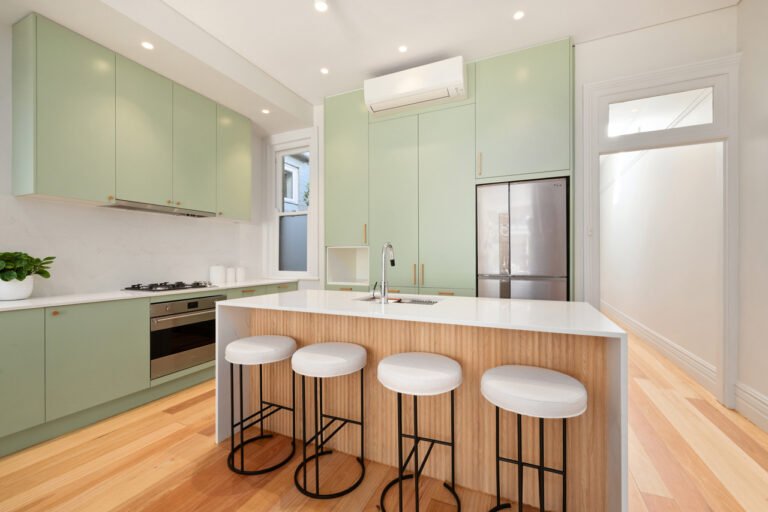
A kitchen makeover, or refacing, can include changing out cabinetry doors, panels and handles, updating benchtops, kick faces and cabinetry hinges. This allows you to achieve a brand-new aesthetic in your kitchen, without your kitchen being out of operation for weeks at a time.
You Want a Refresh Without a Full Rebuild
Whether you’ve just purchased a home and want a refresh, or want to update the kitchen before putting a home on the market, a kitchen refacing is an excellent option when a full rebuild is not necessary.
Your Existing Layout Works Well
If your existing kitchen is in good condition, and your layout works well for the household, you may not need a full kitchen renovation. If the benchtops are tired and dated, or the cabinetry doesn’t work with your home’s aesthetic, a refacing allows you to change these elements while keeping the underlying structure in place.
When Is a Full Kitchen Renovation a Better Choice?
Your Kitchen Has Structural or Water Damage
One of the main criteria for choosing a renovation over a reface is when your cabinetry carcasses are damaged. Whether the structure is no longer viable, or there’s water damage and mould present, this may rule out refacing and mean a broader kitchen renovation is needed.
The Existing Layout Doesn’t Work for Your Household
Having a kitchen that works for the needs of your house is a fundamental element of a well-functioning home. If your kitchen layout doesn’t work for you, then a full kitchen renovation may be the better option. Updating a layout may involve things like changing electrical and plumbing, tiling or flooring work, new cabinetry and other changes.
You’re Replacing Most of the Kitchen Anyway
Sometimes you might start off thinking a refacing is all you need, but the further you get into the process, you realise you’re changing out more than you initially thought. It may be more efficient to go for a full renovation in this case.
Do You Need Council or Strata Approval for a Kitchen Renovation in Sydney?
Council Approval and Development Requirements
Many cosmetic kitchen updates may not require council approval, but requirements depend on the property and the scope of work. Some minor renovations can be exempt development, while certain internal alterations may qualify as complying development. Other work may require development consent. You can check the relevant approval pathways through the NSW Planning Portal.
When You May Need Council Approval
Depending on the property and scope of work, approval may be required if your kitchen renovation involves any of the following:
- Structural alterations: Removing, cutting into, or modifying load-bearing walls.
- Footprint or external changes: Expanding the exterior size of the house or altering windows and external doors.
- Major plumbing or drainage changes: Significant changes to plumbing or drainage may require additional approvals or licensed trade work, depending on the project.
- Heritage properties: Heritage-listed homes and properties within heritage conservation areas can be subject to additional planning controls, so requirements should be checked before work begins.
Strata Approval for Apartments and Townhouses
If you live in an apartment, unit, or townhouse in Sydney governed by a strata scheme, council approval is separate from owners corporation approval. Under NSW strata renovation rules, kitchen renovations generally require permission, while cosmetic changes that don’t affect the structure or require waterproofing may not. The type of approval required will depend on the work and your strata scheme’s by-laws.
Why Your Property and Location Matter
Your property type and location in Sydney can affect how you approach a kitchen renovation or reface, as heritage controls, strata by-laws and planning requirements can affect what changes you can make to your property. For example, those considering kitchen renovations in the Northern Beaches should check whether any planning or heritage controls apply to their property. Strata owners should also check their scheme’s by-laws and approval requirements before starting work.

How to Choose the Right Kitchen Renovation Contractor
Check Their Local Renovation Experience
Because approval requirements and property types can vary across Sydney, look for a contractor that has experience in your area and with the type of kitchen project you’re planning. For residential kitchen renovation work, it’s also worth checking that the contractor holds any relevant NSW licence required for the work.
Ask What’s Included in the Quote
Ensure the contractor you’re choosing offers detailed quotes and provides a quote after an on-site inspection. A good contractor will be able to guide you properly in terms of the feasibility and cost of your vision and be honest when there may be more (or less) work than you think.
Confirm Who Manages the Different Trades
Find a contractor who will manage all the tradespeople for the job. Having a single point of contact can make coordination easier; just ensure that electrical and plumbing quotes are given before the job starts and are in line with local prices.
Kitchen Renovation vs Makeover: Which Is Right for Your Home?
Ultimately, you need to ask yourself whether your kitchen fundamentally works for you and your family or not. If you’re happy with the way the kitchen works and just want aesthetic upgrades, then a refacing may be the better option. However, if your kitchen needs functional, structural or substantial changes, then you’re likely looking for a full kitchen renovation.
