




Is Concrete the Right Choice for Your Northern Beaches Home?
The Benefits of Concrete for Driveways and Patios in Coastal Climates
The Northern Beaches is one of Sydney’s most sought-after areas because of its proximity to great beaches, waterfront properties and access to Sydney city life. But this coastal climate can place extra demands on outdoor materials, with salt air, moisture and seasonal storms affecting how surfaces weather over time. Properly installed concrete is a durable, low-maintenance option for driveways and patios. Unlike timber, it won’t rot, and a continuous slab avoids the individual pavers that can shift or develop weeds between joints. However, concrete can still crack or settle if the ground and drainage aren’t properly prepared.
With an appropriate surface finish, concrete can also provide good slip resistance. As a non-combustible material, it may be a suitable option for outdoor areas on bush fire-prone properties, subject to the applicable building and planning requirements.
Choosing Between Plain, Coloured and Exposed Aggregate Concrete
Gone are the days when a concrete driveway or patio meant plain flat grey was your only option. Advances in colour and aggregate technology as well as design preferences mean there’s a wide variety of concrete driveway and patio finishes available, including plain, coloured, stamped and exposed aggregate concrete. These options can enhance the appearance of your outdoor space, while the choice of texture and finish can also affect slip resistance and maintenance requirements.
Considering Drainage, Slopes and Weather Exposure
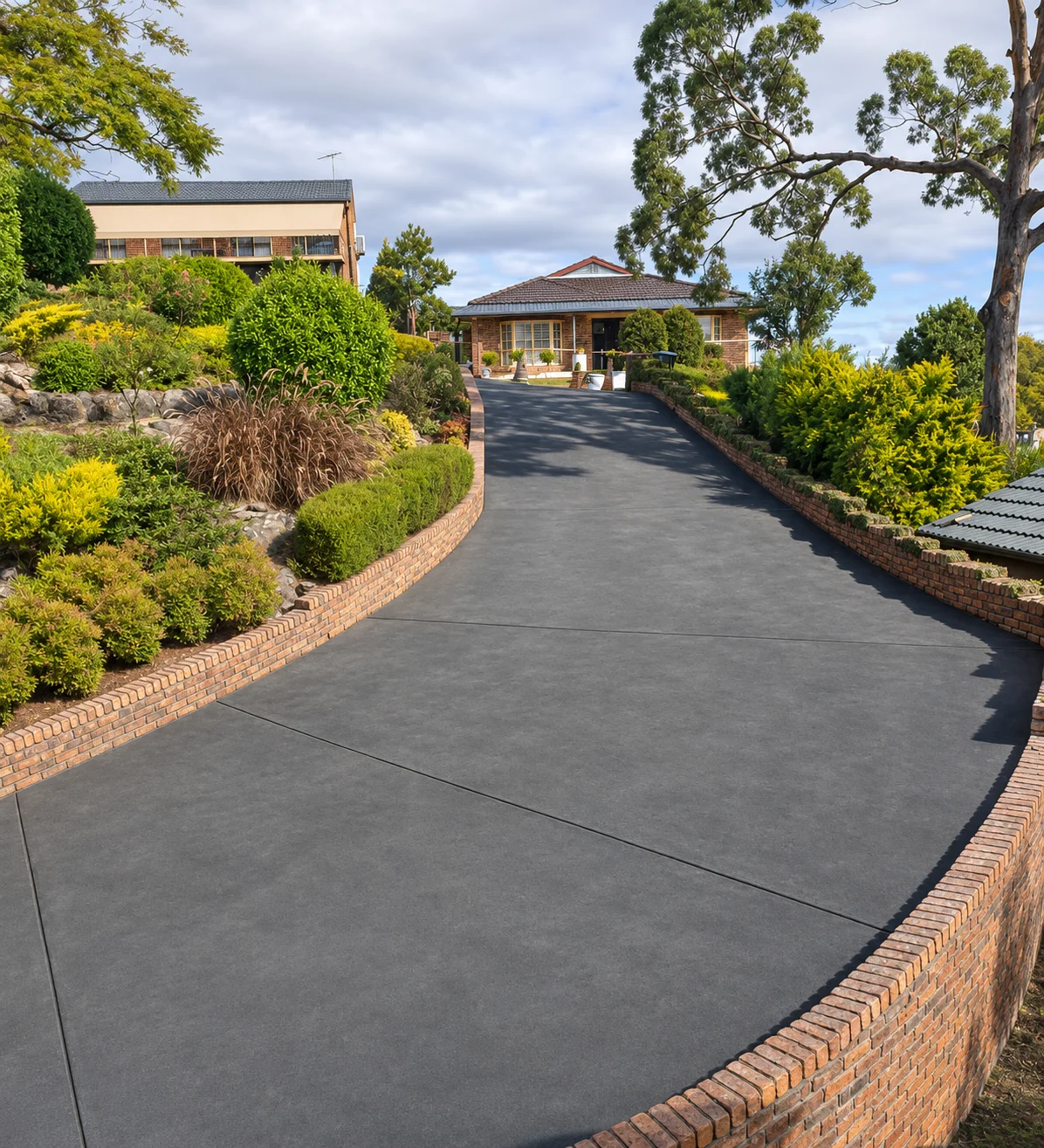
Weather exposure will always be a top consideration on the Northern Beaches, but many properties are dealing with sloping terrain, and so driveway gradients and drainage need to be taken into account. Concrete can work well on sloping properties when the site is properly prepared and the slab is designed for the conditions.
For example, homes on hilly blocks around Bilgola and Avalon Beach may need particular attention to vehicle access, surface falls and stormwater runoff. This is where working with someone experienced in concreting on the Northern Beaches can help with planning the right approach for your property.
What Should You Expect from an Outdoor Concreting Project?
Planning and Design
Before starting a driveway or patio project, check whether planning approval is required. Some driveways, paving and patio projects may qualify as exempt development if they meet the relevant NSW planning standards, while others may require approval.
If your driveway involves a new or modified vehicle crossing over Council land, Northern Beaches Council has separate approval and contractor requirements. Council also has restrictions on finishes for vehicle crossings over public land, so your preferred decorative concrete finish may not be suitable for every part of the driveway. It’s worth checking these early, particularly if the project involves changes to access, drainage or the existing driveway layout.
Whether your design is included in a new build, or you’re adding to an existing structure or replacing an old driveway or outdoor area, you want to have the necessary approvals and designs in place before work begins.
Excavation and Site Preparation
Site preparation is key to long-lasting concrete as it creates a stable, even and well-drained foundation that reduces the risk of cracking, shifting or uneven settling over time.
Your contractor will remove grass, roots and other unsuitable materials from the site, then prepare and compact the base to support the slab. They’ll also plan the required thickness, reinforcement and drainage so that water is directed appropriately and doesn’t undermine the surrounding ground or building foundations.
Pouring the Concrete
Once the site is properly prepared, your contractor will pour the concrete. This is often the quickest part of a new driveway or patio, and can often be completed in a day depending on the size and complexity of your project.
The concrete delivery trucks arrive, and the crew pours, screeds, floats and finishes the slab. The time required depends on the area, access, weather and chosen finish. Decorative finishes such as stamped or exposed aggregate concrete may involve additional steps and careful timing.
How Long Does Concrete Take to Set and Cure?
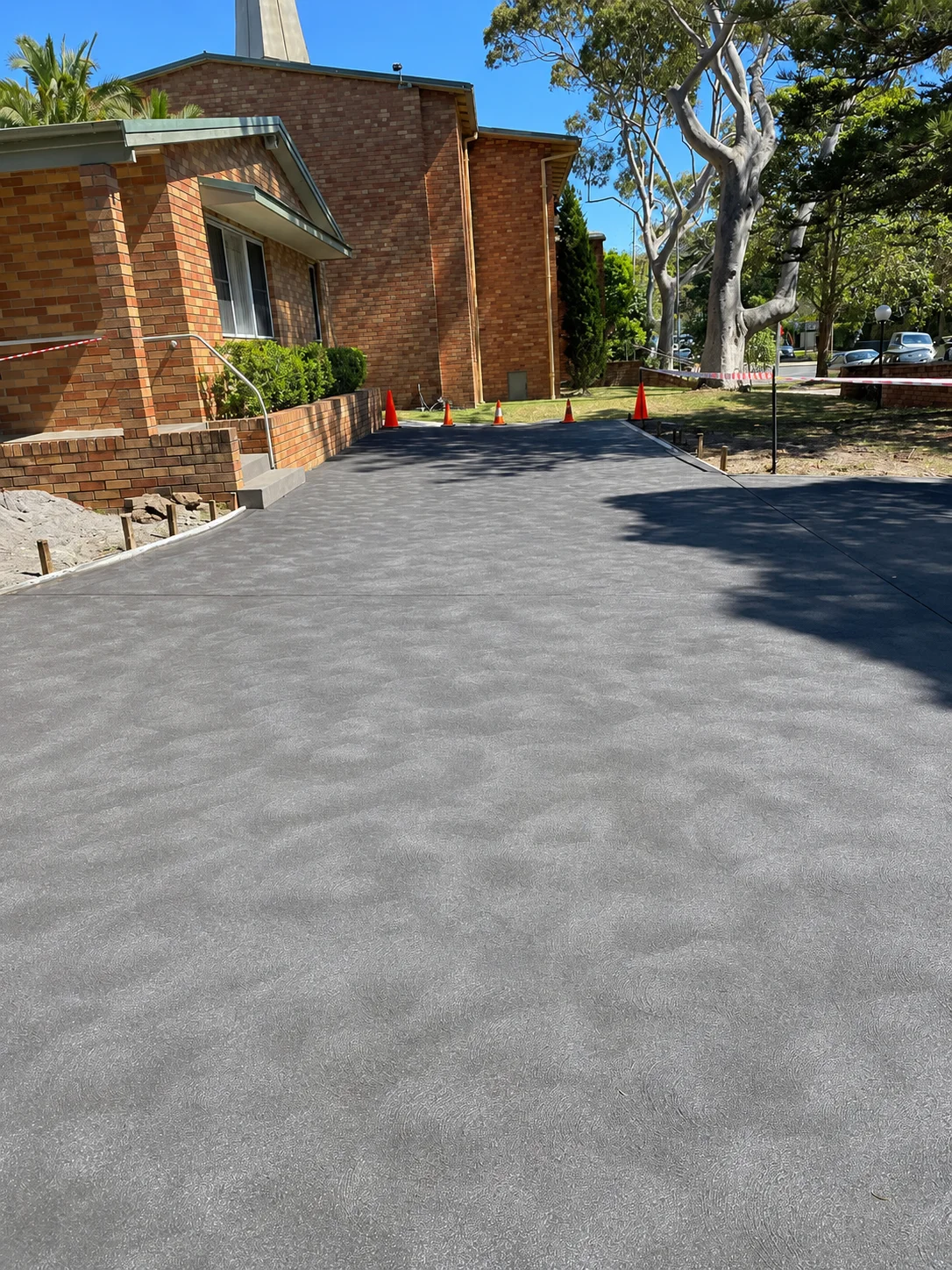
Setting and curing times are different. As a general guide, newly poured concrete may be suitable for light foot traffic after around 24 to 48 hours, while vehicles usually need to stay off the surface for at least a week or as advised by the contractor.
Concrete typically reaches its specified 28-day compressive strength at around 28 days, although strength development can continue beyond this period. The exact timing depends on the mix, weather conditions and curing methods, so always follow your concreter’s advice before using the new surface.
How Can You Keep Your Concrete Driveway or Patio in Good Condition?
Regular Cleaning and Maintenance
Concrete is a hardy material, needing much less maintenance than some alternatives, such as timber decking. However, it’s not completely set and forget!
Keeping leaf matter and organic material off the concrete is the first part of maintaining your concrete for the long term; a weekly sweep is a useful starting point. In drier months, a hose-down every now and then to remove built-up dust is a good idea, but any spills or stains should be cleaned promptly. For oil and grease, use a suitable concrete cleaner or degreaser according to the manufacturer’s instructions, and avoid harsh acids that may damage the surface.
If your concrete has been sealed, check the recommended maintenance and resealing intervals for the particular product. Some sealers may need reapplication every few years, depending on traffic, weather exposure and the type of finish. Any cracks that appear in the slab or joints should be assessed and repaired where necessary, especially if they’re widening or allowing water into the underlying ground.
With proper installation and maintenance, a concrete driveway or patio can last for several decades, although its lifespan will depend on the quality of construction, ground conditions, exposure and ongoing care.
